Four numbers entered the cutting room
| Measurement | On the envelope | On the order | Customer’s explanation |
|---|---|---|---|
| Neck | 16½ | 16 | “My good shirts have always been a sixteen.” |
| Chest | 43 | 44 | “I thought you needed room for a toast.” |
| Waist | 39½ | 38 | “The wedding was six weeks away when I ordered.” |
| Sleeve, shoulder to wrist | 25½ | 27 | “I wear a watch.” |
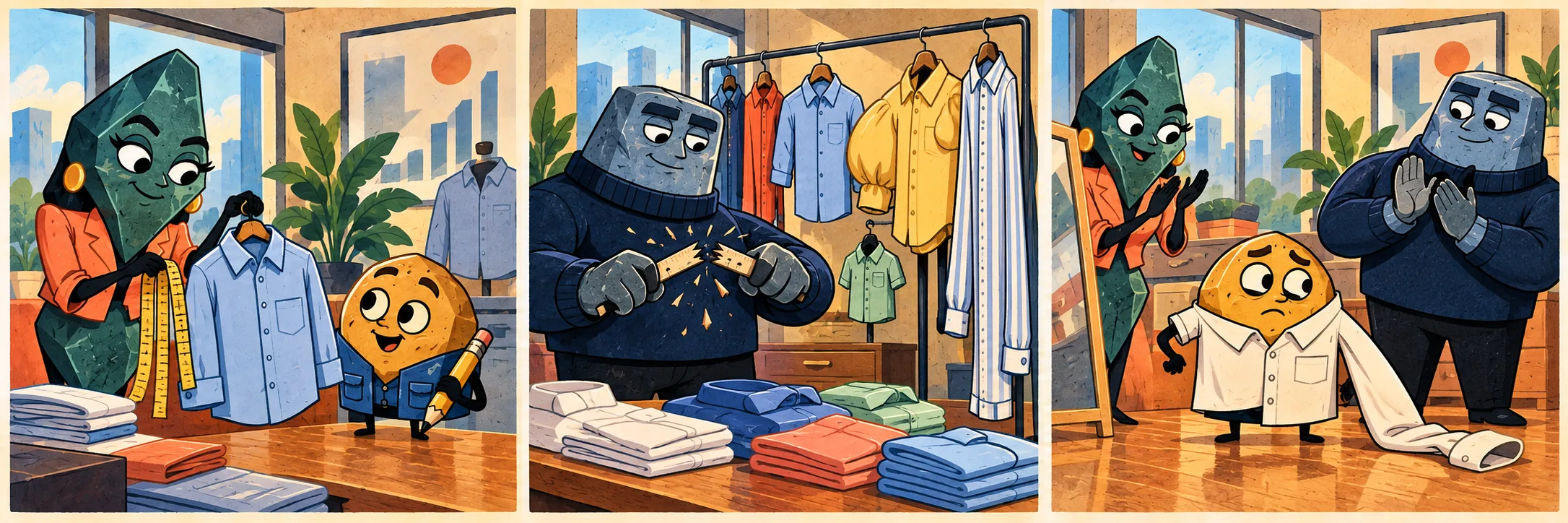
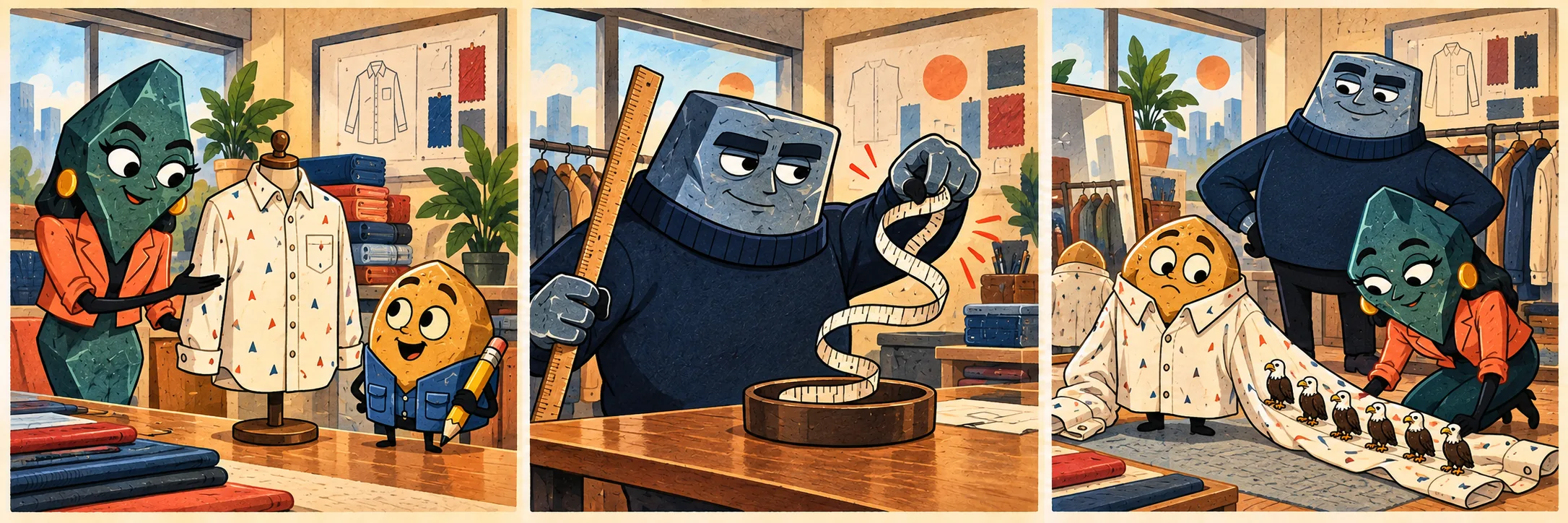
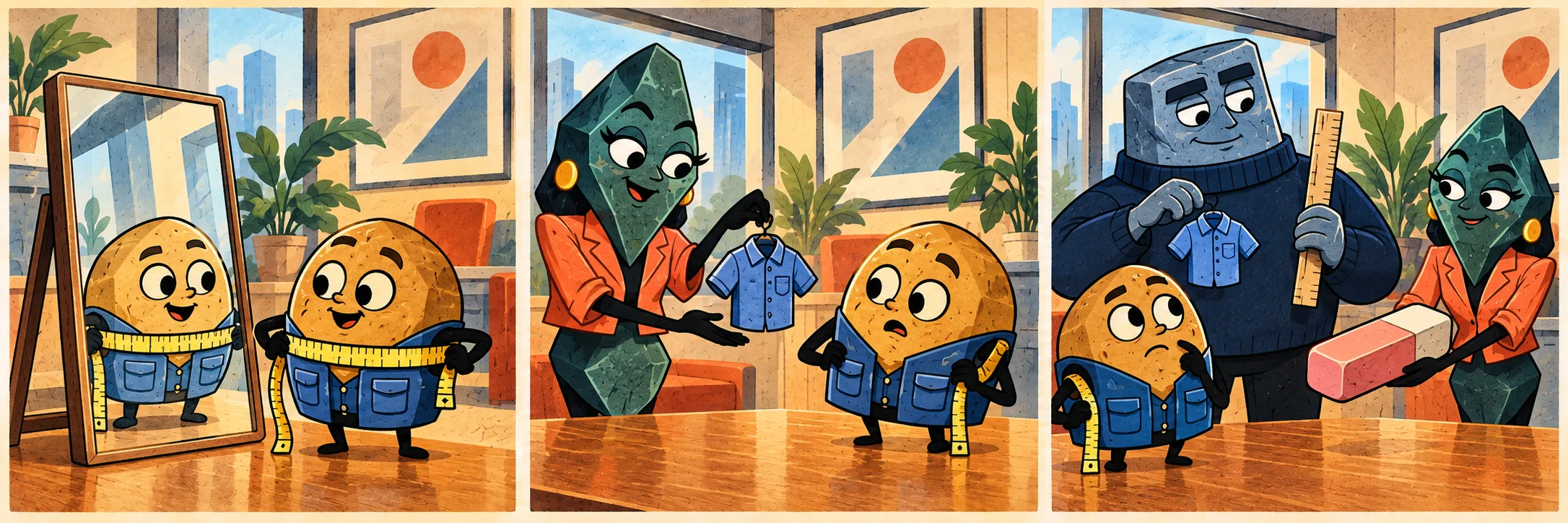
The tailor buttoned the shirt around the dress form set to the four numbers on the order. It closed. The customer studied the form for a while. “He carries it differently,” he said. His mother turned the envelope over to leave room for whatever came next.
Disposition of the left cuff
They pinned the sleeve at 25½. The watch appeared. Shortening it would put the initials across the new fold, so the tailor marked the cuff to come off intact and go back on after the sleeve was cut. The collar needed replacing. At the waist there was no inch and a half waiting in the side seams. That part needed fresh cloth.
The tailor asked him to sit in the fitting chair, button the sample and reach forward as if passing a bread basket. This produced a waist measurement all three people in the room could live with. His mother filled out the new ticket.
One item survived the appeal exactly as ordered. His initials really were R.B. His mother had also taken those measurements, thirty-eight years earlier, and kept the paperwork.